The Girl Who Vanished: Rory Gene Kesinger

Rory Gene Kesinger was a 24 year old drug dealer, bank robber and gun runner who went missing in 1973 and was never heard from again.

What stands out about her are bizarre tales of her escapes and encounters with authority, which were like something out of a vintage Hollywood movie. She is perhaps the most interesting forgotten female outlaw out there.

Rory was a 5’3, 118 lbs beauty with translucent blue eyes, caught up in the stereotypical hippie vagabond lifestyle of the 1970s. She ran away from home at the age of 15. Her family has never seen her since then.

Looking baked in an odd mugshot

Ironically, her father was a security director who prevented shoplifting in department stores. He could not, however, control his wild daughter. In 1969, Rory’s dad wrote a hilarious Letter to the Editor column in the Daily Illinois State Journal, regarding the “out of hand” situation of youths and shoplifting:

“We in security realize that shoplifting is sometimes brought about in our younger set because of their desire to feel ‘in’ with friends. Whatever that ‘thing’ is, kicks derived from theft would no longer be if these same youths were educated as to the consequences a court conviction would have on their young lives.”

Poor Mr. Kesinger. Can you imagine this square and sanctimonious man’s reaction to his daughter’s sexy, exciting life of crime? He was, most likely, traumatized.

Rory really got around: she was said to have been wanted by police in several states, such as Kansas, California, Texas, and Alaska.

A cop found Rory running around naked in the woods of Pembroke, Massachusetts, dressed only in lingerie in January of 1973.

She informed him that she had been raped, but when he took her to the safety of his home, she switched out the lights, pulled out a gun and told him “I’m sorry, but I have to kill you.” 

The officer managed to tackle and wrestle the gun away from Rory, and afterwards stated that, “You would just not think that a nice- looking girl like that would kill you in a heartbeat.”

After being escorted to a hospital, Rory pulled a gun on a caseworker, as well as a cop, yelling “die you fucking pig.” She was tackled down and subdued yet again.

An avid drug user, Rory was supposedly high during all of these arrests, which gave her the courage to act stupidly brave, even when in the cross-hairs of a gun. Perhaps this also brought about her demise.

Rory was finally incarcerated in Plymouth County jail, but on the night of May 26, 1973, she managed to escape when someone smuggled a hacksaw inside the jail to her. A corrupt guard may have also been involved.

She sawed the bars off of her cell and tied bedsheets together to escape into the dark and foreboding summer night.

The sheriff says that “in the old prison, which is still up, you can still see the cut marks on the bars where she cut out.” What a legend.

After this escape she was never seen again and was most likely killed and then secretly buried by her criminal associates.

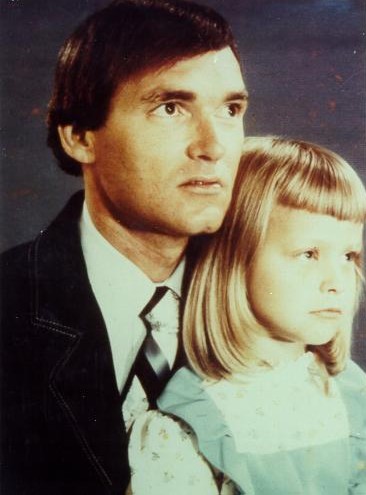
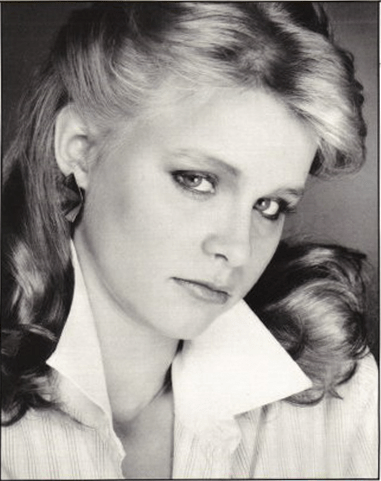
15-year old Rory in her high school portrait.

According to Provincetown police Detective Warren Tobias, he was informed by an associate of Rory’s who was arrested with her in 1974 that she was “pushing up daisies.” There was no doubt that she did not live long after her daring dash from jail.

Rory was long suspected to be the Lady of the Dunes, an unfortunate young woman who was found murdered on a beach blanket on July 26, 1974 in Massachusetts.

The poor red-haired girl was raped, strangled so hard that she was nearly decapitated, violently bludgeoned on one side of the head, and her hands removed to prevent fingerprint identification.

The battered corpse of the victim, found in brush by a road.

However, after exhuming the body and testing it alongside Rory’s elderly mother (the poor woman was in her 80s at the time), it was found that there was no DNA match between them. Rory is not the Lady of the Dunes!

Sadly, Rory’s body was never found, nor any viable trace of her yet. Her fate (as well as that of the Dunes Lady) is still an unsolved mystery.

The Tragedy of Betty Williams: Teen Angst with a Body Count

Betty Williams was a 17 year old girl who was murdered via shotgun to the head by her football player ex-boyfriend in March of 1961. The case is even sadder than it seems: the ex, fellow teen high schooler John “Mack” Herring, claimed that Betty was so despondent over their break-up that she begged him to kill her.

It sounds absurd at first, like a ridiculous ploy for a guilty killer to cover up a cold-blooded murder. And yet, Betty’s classmates claim she was in a fog of depression and suicidality after her relationship with Mack went sour.

On the day of her murder, Betty wrote in her diary:

“I want everyone to know that what I’m about to do in no way implicates anyone else. I say this to make sure that no blame falls on anyone other than myself.

I have depressing problems that concern, for the most part, myself. I’m waging a war within myself… So rather than admit defeat I’m going to beat a quick retreat into the no man’s land of death.

As I have only the will and not the fortitude necessary, a friend of mine, seeing how great is my torment, has graciously consented to look after the details.

His name is Mack Herring and I pray that he will not have to suffer for what he is doing for my sake. I take upon myself all blame, for there it lies, on me alone!

This is an explanation, not an absolution. Her story is grim, and the judgments of Betty’s character which were made after her death were disheartening.

Betty was an outcast at her Odessa, Texas high school. In a moralistic 1950s southern environment, Betty defied all restrictions and slept with boys she wasn’t “going steady” with. Her classmates judged her, and in modern jargon she would be called a hoe. She was often pretentiously intellectual, and was fascinated by Beatnik literature and the subversive stand up comedy of Lenny Bruce.

Creepily prescient in doing so, she played Juliet in her school production of Romeo & Juliet.

Rather than bite the bullet and try to fit in among her prudish peers, Betty spread communist-style, pro-racial equality pamphlets throughout her school. She raised their ire, and classmates thought she was crazy for espousing these ideals.

Worst of all: she wore tight 1950s thot sweaters with no bra on.

Mack, on the other hand, was a middle-class, well groomed paragon of normalcy. He was a popular well-liked football player, a jock with more brawn than brains. Friends say he had an empathetic streak: when he wounded an animal while hunting, he would honor its life and finish it off. He was an ace with a gun.

In the summer of 1960, Mack and Betty began seeing each other. Mack would sleep with Betty and treat her like a “good-time girl,” but never treated her like a girlfriend. She would never meet his parents or friends.

This enraged Betty, who immaturely proceeded to cheat on Mack with a football buddy to make him jealous. Mack responded by dropping her like a hot potato. Betty fell into a deep melodramatic depression. Her diaries and letters read:

“I’ve never been so hurt in my life and I guess your note was the jolt I needed to get me back on the straight and narrow. I’ve done a lot of things, I know, that were bad and cheap, but I swear before God that I didn’t mean them to be like that. I was just showing off. “

“I feel so lonely and deserted I don’t care what happens now or ever. … This is pure hell!”

“I am consumed with this burning emptiness and loneliness that has taken charge of me, body and soul. I have to fight it! If I am to live I have to fight [or] else it will pull me down, down, down into that thankless pit of fear, pain, and agonized loneliness.”

You’ve made me realize that instead of being smart and sophisticated like I thought, I was only being cheap and ugly and whorish.

Betty began telling classmates that she fantasized about suicide, and dreamed that “heaven must be a nice place.” Classmates were used to Betty’s dramatics, and simply brushed her off. She let at least five different people know she wanted to die, and even beseeched some of them to kill her. They laughed it off.

The dramatics, however, were becoming reality. Betty was childish and depressed and needed help. Rather than help her, peers dismissed her as a morbid weirdo.

On the day of her death, Betty slipped away from friends into Mack’s car. She told her pals that she was shocked that Mack actually showed up, and that she had to call his bluff. They had no idea what she meant at the time, but they would shortly.

When Betty went missing and police came knocking, Mack’s alibi fell apart. He eventually took cops to a remote hunting location, and led them down a path of twin footsteps to a water tank. There in the tank lay Betty’s frail body, floating in pink pajamas with a nearly decapitated head from the impact of the shotgun.

Police ordered Mack to fish out her body. He stripped down to shorts and went to retrieve her mangled corpse. Observers record that Mack had little to no reaction as he did so. The teen boy was emotionless as he picked up his bloodied victim and presented her to authorities.

An unbothered Mack (right) leads police to his dead ex-girlfriend’s body

Mack claimed Betty had told him she was happy to die, and kept talking about what heaven would be like. Before killing her, Mack allowed Betty to retrieve her coat because she was shivering. Betty asked Mack for “a kiss to remember you by,” and then thanked him. He held the shotgun to her forehead, and pulled the trigger.

Even after all this, the people of Odessa, Texas took Mack’s side. They assumed Betty had a whorish character, and that Mack had killed her for a reason. Mack was more popular than Betty, and frustratingly, the world had taken his side.

Mack was tried in a sensational trial, and was acquitted of homicide due to reasons of alleged temporary insanity. A juror was heard saying about Betty, “that girl was nothing.Nobody wanted anything to do with her. Mack was considered to be more of a victim than the girl he had killed. He went on to live a full life, and died at the ripe age of 75.

Mack having an OJ moment as he was acquitted of murder

As for Betty: she had played a dangerous game with a boy more heartless than she had known. This was Russian roulette, but Mack, rather than fate, had pulled the trigger. Betty had hoped to bait some sort of love out from her uninterested ex, and he had responded by blasting her head nearly clean off.

The young, naive girl who had played Juliet madly in love with Romeo for a school play had thought that dying for one’s lover was the ultimate act of pathos and devotion. Her ex-lover and society disagreed.

Students of Odessa high school believe the auditorium is haunted by Betty’s ghost, and joke about it when they hear strange noises or footsteps. Her spirit seems to roam, searching for the elusive justice it was never granted.

A Hairy Situation: The Peculiar Case of Antonietta Gonzalez

Animalia Rationalia et Insecta (Ignis): Plate II, ca. 1575/1580 by Joris Hoefnagel

How many women out there have felt that they were too hairy to exist in a smooth-skinned world of constant razor advertisements? As in, the sight of your leg hair has caused you great dismay and discomfort? Imagine that everyday, but times a million and on your face.

This is what life was like for Antonietta Gonzalez and her hairy sisters, who stunned and puzzled 16th century observers with their rare and unique genetic condition: hypertrichosis, or werewolf syndrome. An excessive growth of hair about the face and body, of which only 50 congenital cases have been recorded since the Middle Ages.

Little Antonietta was the daughter of Petrus Gonsalvus, a Spaniard from the Canary Islands who also had the same condition. He did not have it any easier than his children would, and was shuffled around Europe by noblemen who were all scrambling to gawk at the man’s hairy condition in morbid fascination.

Animalia Rationalia et Insecta (Ignis): Plate I, ca. 1575/1580 by Joris Hoefnagel

This was a man who dressed in fine robes, was educated, cultured, spoke fluent Latin, and kept in the courts of royalty. In his 30s, Catherine de Medici ordered Petrus to marry one of her servant girls, also named Catherine. The girl did not know who she was marrying until she reached the altar. She must have been startled, but went along with it as she had no choice.

Luckily for Petrus, he had found a loving and devoted wife who adored her wolf-husband with much care, and stayed with him for all her life. Catherine could have left him after the marriage, but chose not to, and stood proudly by him in portraits of the couple. Rather cruelly, their pairing went on to inspire the tale of Beauty and the Beast. Talk about mean gossip.

They went on to have seven children, four affected with hypertrichosis. Antonietta became the most famous girl in the family after talented artist Lavinia Fontana painted a striking portrait of her.

Portrait of Tognina Gonsalvus by
Lavinia Fontana , circa 1580s.

In 1594, physician Ulisse Aldrovandi wrote that:

“The girl’s face was entirely hairy on the front, except for the nostrils and her lips around the mouth. The hairs on her forehead were longer and rougher in comparison with those which covered her cheeks, although these are softer to touch than the rest of her body, and she was hairy on the foremost part of her back, and bristling with yellow hair up to the beginning of her loins.”

From a very young age, Petrus’ children were considered rare oddities which the people around them tried to observe, analyze and explain away. Was the family’s appearance an act of God? Were they werewolves? Were they man or beast?

Anonyme allemandMaddalena (Madeleine) Gonzales, v. 1580. 

In the modern era, we can easily grasp that they were merely just excessively hairy Spaniards. But in Antonietta’s time, and especially applicable to her and her sisters, people had a hard time reconciling their hairiness to their humanity and femininity.

In portraits of Antonietta, she is doll-like and petite, clearly just a wide-eyed little girl who is amused that her picture is being painted. Lavinia Fontana herself was also a rarity in her time, as one of the only respected and revered female painters of the Renaissance era. Could it have been a cute moment?

It wasn’t cute for long, because to nobles in France and Italy, her portraits were strange collector’s items, to be displayed and scrutinized on a prominent mantel. A conversation piece to be dissected with curious visitors.

Monstrorum Historia, Bologna, Typic Nicolai Tebaldini, 1642.

Sadly, the Gonzalez family’s life becomes a mystery in the 17th century, but it was of their own choosing. They settled in rural Italy to escape the circus that constantly followed them around Europe. The little knowledge that remains of them is fuzzy.

Antonietta’s sister Maddalena married and had children, one of which was affected with the same condition. Her sister Francesca remained unmarried. And depressingly, little Antonietta was said to have died young.

One wonders what Antonietta felt as her pictures were being painted and then spread across Italy. Did she mingle with other girls her age? Was she ever courted by a suitor like her sister Maddalena? We have no window into her mind. But we do have a window into her soul, in Fontana’s immortal portrait of her.

She Died in Style: San Bernardino Jane Doe

Her 33 ½ inch gold waist chain with a gold heart pendant

Some Jane Does don’t have any composite drawings of them available because they were too badly decomposed when they were discovered. Sadly, this was the case for unidentified homicide victim San Bernardino Jane Doe.

Dark-blue bikini top

What managed to survive was her stylin’ fit, which is maybe an insensitive aspect to note, but no other information on her exists so this is all we are left with.

Silver wrist watch with “G&V” superimposed over it

She was found buried in a shallow grave off a California highway in November 2001, wrapped in plastic and tied with duct tape. Whoever wanted her gone took pains to to discard her body. However, due to construction on the Lucerne Valley road, a worker discovered her by pure luck.

On an odd side note, this Doe’s burial was very similar to Laura Palmer in Twin Peaks, who was also found “dead, wrapped in plastic.”

ZANA DI shorts with a design embroidered around the leg (caked with dirt)

The Doe had been decomposing for several months, and her remains were unrecognizable. She was Hispanic, a short girl at only 5 ft tall, had long brown/auburn hair, and was most likely in her 20s. 

Fake nails painted red with yellow flames

Sad to say, this poor girl’s identification hinges on her fashion sense. If by chance some day a family member or a friend comes across these images and remembers “hey, she used to dress like this,” that will be the lost key to this cold case. For now, this Doe’s name is lost to history.

Maharani Jind Kaur: The Warrior Queen Who Fought Back

Maharani Jind Kaur (1817 – 1863) was the beautiful, courageous and tragic wife of Ranjit Singh, the king of the Sikh Empire. The empire fell apart 10 years after his death and was annexed by the British, although she led many military campaigns fighting the colonization.

She was not militarily experienced, but she was brave and determined to retain Punjab’s sovereignty. After the British East Indian company won the First Anglo-Sikh War, they imprisoned Jind Kaur and took her nine year old son Duleep away from her.

Jind Kaur fiercely campaigned for Duleep’s rights as a regent, but the British Crown refused to recognize that he had any and reneged on the treaty they had made with her. They smeared her publicly as “the Messalina of the Punjab,” demonizing her as a “seductress” because she dared to oppose them. 

Duleep and his mother

Her son Duleep was taken to England and was kept under the watchful eye of the Queen Victoria, and was forced to convert from Sikhism to Christianity. Although the British tried to brainwash Duleep into rejecting his mother and her ideals, he missed her throughout his life and yearned to be re-united with her.

Jind Kaur managed to escape prison and hid out in Nepal, where the British envoys surveilled her as they suspected she still had ambitions to revive the fallen Sikh Empire. After 13 years of separation, the British finally allowed her to meet her son again and she died 2 and a half years later.

Jind Kaur did her best to undo the Anglicization of her son and to educate him about his heritage, and wanted the priceless Kohinoor diamond that the British had stolen from her late husband to be returned to Punjab and for her son to rule his father’s great empire once again. This never happened. The only consolation for Jind Kaur was that she was finally reunited with her son after thirteen years of separation from him.

Duleep had requested the Login family (who had housed him in his youth) to provide his mother a home in England. When Lady Login went to visit Jind Kaur, she described her as being aged by stress and suffering partial blindness, “yet the moment she grew interested and excited in a subject, unexpected gleams and glimpses through the haze of indifference and the torpor of advancing age revealed the shrewd and plotting brain of her, who had once been known as the ‘Messalina of the Punjab’.”

Duleep had also negotiated the return of his mother’s jewels, which made her overjoyed. Lady Login claimed that when she visited Jind Kaur after the jewelry’s return, “she forthwith decorated herself, and her attendants, with an assortment of the most wonderful necklaces and earrings, strings of lovely pearls and emeralds.”

Portrait of the Queen in England wearing her jewels, by George Richmond. The painting was sold in 2009 for £55,200

After a life of sorrow and struggle, Jind Kaur died at age 46 in England. The British government refused to allow Duleep to cremate his mother as per Sikh tradition since it was illegal in England. Her body remained in a Dissenters’ Chapel in a rural cemetery for a year until her son was allowed to returned to India to cremate her.

Unfortunately, none of Jind Kaur’s wishes were fulfilled. The Kohinoor diamond was never returned, Punjab would be ruled by the British until 1947, Duleep was only allowed to visit India in two tightly controlled visits, his body was buried in England with Christian burial rites against his wishes, and their royal bloodline eventually died out, just as the British monarchy hoped it would.

Although depressing, Jind Kaur’s story symbolizes Sikh bravery and she remains an inspirational figure in Punjab’s history and resistance of colonialism. She died with honor, never forgetting once that she was once, and would always be, a warrior queen.

Bettie Page and the Bondage She Freed Herself From

Bettie Page was the biggest sex symbol of the 1950s. Her pin-up spreads are iconic, her body was unreal, and she’s forever known for her trademark vantablack hair with those sleek brow-sweeping bangs. Bangs that have unfortunately been imitated by cringeworthy indie hipster girls everywhere, but she has yet to be outdone by them.

But what happened when the most famous sex symbol of the 1950s got tired of being ogled by dirty old men? Unfortunately, psychological decline, violence and disaster. Her later years were punctuated by schizophrenic and scary mental breakdowns.

Bettie before the pin-ups

To best understand what brought poor Bettie to point of insanity, it would be advisable to peer back into her troubled youth. Although she looked like a sweet clean-cut girl next door, Bettie was tormented by her abusive rapist father and neglectful mother. She was the second of six children and was horribly deprived of loving, normal parental relationships.

Her mother even deigned to tell Bettie what a period was, and Bettie claims “when I started menstruating at 13, I thought I was dying because she never taught me anything about that.” When her mother’s lover hit on her and tried to pull her into his car, Bettie was blamed and accused of seduction, and sent to go live with her creepy father. The girl who would go on to sell sex had her views of it warped at an early age through no fault of her own.

After graduating school, Bettie tried to become a teacher. She could not control the leering boys in the classroom. She tried her hand at secretarial work, became a typist, learned to sew, do her hair and makeup, got married and subsequently divorced.

In 1945, Bettie landed a screen test with Fox. She declined the advances of a perverted studio head, and they declined her contract. In 1947 she went to New York to try and become an actress. Instead, she was raped by a group of men and quickly left the city.

At this point, anybody in Bettie’s shoes would have lost it. Can you blame her? But she soldiered on and in 1950, an ex NYPD officer with a roaming eye approached Bettie while she walked alone along the dreamy Coney Island shore to offer up a card for his services. Services which were: pin-up model fetish photography. She accepted. As a girl, she had always dreamed of becoming an actress. This wasn’t exactly what she had prayed for, but it was something.

Bettie said of herself at the time ; “I had lost my ambition and desire to succeed and better myself; I was adrift. But I could make more money in a few hours modeling than I could earn in a week as a secretary.” She had a point.

At this time, Bettie grew her trademark bangs to cover her large forehead, which she disliked, or was made to dislike by the cop photographer. He told her the bangs would prevent the sheen of her large forehead from being reflected by the flash of the camera.

From this time onwards, Bettie would do a lot of bondage and S&M photography, partnering up with talented sleaze-makers like Irving Klaw and Bunny Yeager. She starred in striptease movies, she was on magazine covers. The 1950s were a time of prosperity for Bettie Page. Even the FBI tried to have her cheesecake dance clips burned. Everybody wanted a piece of Bettie.

But what did Bettie want? Sci-fi authour Harlan Ellison wrote her salivating praise: “She is simply pure fantasy. A dream girl in all the nicest ways, in that undiluted human passion way that we all shared at some point in our innocence. She is lust in an ice cream cone (two scoops), enthusiasm in the whisper of nylon, postpubescent rambunctiousness in the back seat of a Studebaker Commander. … She was an icon, Venus on the spike heel, the goddess Astarte come again, smoother and sleeker and possibly available.”

The thirst was real.

In 1967, Ellison would write the iconic science fiction short story I Have No Mouth, and I Must Scream. And in the late 1950s, Bettie had no mouth (it was revoked from her), just her body, but she was ready to scream.

Bettie left fetish modelling in 1959 to become a born-again Christian. She was 35 years old, in a dull marriage, and felt used and regretted her nude photos. Some claim that Bettie had been informed that a man had died in a bondage session which had somehow involved her photos. This was just too much.

Bettie became a disciple of the showboating reverend Billy Graham. She said of it, “When I gave my life to the Lord I began to think he disapproved of all those nude pictures of me.”

In 1958 she attended a multiracial sermon and became inspired by ideas of peace and equality. She tried to become a missionary in Africa, but was rejected due to her several divorces. She dropped out of college while pursuing a master’s degree.

And then, her life fell apart. 1972 was not a good year for Bettie Page. It reads like one long rap sheet.

In January, Bettie ran wild with a .22 caliber pistol screaming about “the retribution of God” at a ministry retreat. Her sympathetic ex-husband took her home with him.

 In April, however, Bettie threatened to stab her ex-husband and children if they refused to pray in front of a portrait of Jesus. “If you take your eyes off this picture, I’ll cut your guts out!,” were her words. She was taken to a mental institution for 4 months, then released.

In October, a cop was called to her ex-husband’s place yet again after Bettie went on a destructive rampage inside. After the officer left the car and returned, he “saw Bettie in the back seat, with her dress pulled up, panties around her knees, masturbating with a coat hanger that the officer had left.” She spent another 6 months in a mental institution.

Things were quiet for awhile until 1979, when she attacked 2 neighbours with a knife. The neighbours were forced to knock her out with a wrench. This time she spent 7 months in an institution.

 The worst was yet to come. In 1982, she stabbed her landlady 20 times while yelling “God has inspired me to kill you!” The poor landlady woke up to a possessed Bettie sitting on top of her with a foot-long serrated bread knife. Bettie stabbed her four times in the chest, narrowly missing her heart, stabbed her hand eight times, severing the top of her third finger.

When police came, they “found Bettie in the shower with her clothes on, trying to wash out the blood stains. She kept the police waiting for an hour before she dried herself off.” Afterwards, Bettie would spend 10 much-needed years back at an institution.

Following these deranged incidents, Bettie managed to get the help she desperately needed for her schizophrenia, and she stopped attacking people. Sadly, she was penniless for many years, until her son and a team of lawyers helped her profit from royalties of her likeness which were being used in the media. She signed autographs of her pin-ups in her old age, and managed to gain a semblance of stability. Bettie died of a heart attack in 2008.

Her conflicted legacy still remains to this day. Every girl obsessed with vintage glamour wants to look like Bettie. But did we really understand her? Said Bettie in 1998 of her career, “I never thought it was shameful. I felt normal. It’s just that it was much better than pounding a typewriter eight hours a day, which gets monotonous.”

With her looks and brains, she never had to pound on a typewriter again. Instead, we intrigued devotees pound on our keyboards to churn out her tragic yet thought-provoking life story.

A Captive Heart: The Distressing Life of Suzanne Sevakis

 There are so many disturbing true crime cases out there, but I think the story of Suzanne Marie Sevakis (aliases Sharon Marshall and Tonya Dawn Hughes) takes the cake. She lived a brutal life of prolonged abuse and captivity that is a nightmare to read about. And it ended in a horrendous murder.

 Her tale is almost like a combination of Lolita and Henry: Portrait of a Serial Killer. And it serves as a warning for women to be very careful about what kind of a stepfather they bring into their children’s lives.

 Suzanne’s life was turned into a living hell at age 5, when she was kidnapped by seasoned psychopath Franklin Delano Floyd. 

Suzanne and her captor

This man named after the president was a 30 yo lifelong criminal with arrests for being a pedo, rapist, bank robber, and assault and battery. And soon, he would be a murderer. 

The Stage is Set

Floyd was able to hide his arrest records from employers and the women he dated, including Suzanne’s mom Sandi, who was smitten by the manipulative sociopath she met at a truck stop in 1974 and subsequently married.

 In 1975, Sandi was jailed for passing bad cheques at a grocery store while merely trying to buy diapers for her young children (she had 4, all younger than Suzanne). While she was jailed, Floyd made off with her children and disappeared. 

Baby Suzanne

Sandi was broken when she asked police to help her find her missing children and they told her that Floyd had a right to take them “because he was their legal stepfather.”

 Sandi managed to find her two middle daughters who were dropped off at a church charity home, but she never found her youngest son (Floyd had murdered the baby) and would never see Suzanne again.

 From then on, Floyd would drag young Suzanne around from state to state, all across America, and made up false identities for both of them. Evidence shows he started abusing her at a young age.

A Double Life

 But whatever was going on behind the scenes, Suzanne, now known as Sharon, hid well. At school people knew her as the intelligent beautiful blonde who volunteered for many programs and had stellar grades. She loved to read Shakespeare, and wanted to go into aeronautic space engineering after graduating.

 They had lied to the school she attended that her mother had either died from cancer or a hit and run accident (oddly prescient later on).

 However, she was strictly controlled by Floyd, who at this point was going by the alias Warren Marshall. At one point when a babysitter accused Floyd of molestation, he quickly fled the state with Suzanne before he could be investigated.

  When friends tried to phone Suzanne, Floyd monitored the phone conversations. He was a fugitive since the 1970s and dreaded getting caught, especially now that he had kidnapped Suzanne and murdered her brother.

 At one point when a friend came over to the “Marshall’s” home for a sleepover, Floyd took them to a sleazy bar and had the teens dress up in revealing garments and makeup. When the two returned home and began mocking the old creepy patrons who had hit on them in the bar, Floyd entered with a gun and threatened them for “making fun of men for no reason at all.”

The End of Hope

 Suzanne’s life would go downhill from here. Floyd did not let her date at first since he was abusing her, but eventually allowed her to in order to divert suspicion. Suzanne ended up pregnant in the last year of high school with a boyfriend’s baby who she named Michael. 

 Despite this, Suzanne graduated with a full scholarship for aerospace engineering at Georgia Tech but Floyd would not allow her to leave him and attain a degree. Her dreams of working for NASA were dashed. She tried to run away with a boyfriend in 1986, but Floyd found them and took her back by force.

 After this, Suzanne was pressured into becoming a stripper by the lazy unemployed Floyd, and he took 100% of her profits. He also made her get cheap breast implants. At this point his alias was Clarence Hughes, and Suzanne became Tonya Dawn. In 1989, he forced her to marry him and he went from pretending she was his daughter to his wife.

Violence

 Floyd would call and check on Suzanne several times a day when she was at the club, and he would beat her leaving visible bruises if she did not bring back enough money each night. She was deathly afraid of Floyd and told a friend that “if I try running away again, Clarence will kill me and my two year old son.“

Cheryl

 Around this time, Floyd became acquainted with Cheryl Ann Commesso, a fellow stripper who worked with Suzanne. He began beating her and pimping her out, and once beat her in a boat so brutally that she jumped into the river and swam to shore to escape. He tortured Cheryl to death in 1989 for reporting him for welfare fraud, and took photos of her murder which would later be used as evidence against him. 

 It is not known to what extent he involved Suzanne in Cheryl’s murder.

A Terrible End

 In 1990, Suzanne tried to run away again for the last time. Floyd ran her over with a car by the side of the highway while she was walking home with groceries. He had found out that she was going to leave him with a boyfriend she had found at the strip club.

 Suzanne’s skull was contused and bruised, and she died a few days after the hit and run. When Floyd was told she was dying, he was indifferent and did not even come to see her at the hospital. While in a coma, she kept mumbling the words “daddy.” She died alone. 

Aftermath

 Police were unable to convict Floyd for her murder even despite damning evidence from her friends and colleagues. A day after her death, Floyd immediately tried to collect a life insurance policy he put out on her months earlier.

 At her funeral, Floyd placed a photo of himself and Suzanne as a child inside the casket. Nobody present had any idea what a dark role Floyd had played in this woman’s life since she was a child.

 Suzanne Sevakis was dead at age 20 after a lifetime of trauma, abuse and evil. And it wouldn’t end there: Floyd kidnapped and murdered her baby son Michael in 1994. A trail of bodies followed this sick man’s killing spree, as he ruined the lives of all those around him. He rots in jail now, but it will never be enough.

 One can’t even begin to imagine the horror of living a life of fear and secrets the way Suzanne did. It’s unbelievable that nobody was able to help her escape.

 Only in death was Suzanne free from her tormentor. 

Jeanne Hebuterne: Devoted Companion Until Death

Jeanne Hebuterne (1898-1920) was the love of Amedeo Modigliani’s life and his biggest artistic muse. She was described as “shy” and “delicate,” but was often asked by famous artists to pose for paintings because she was so beautiful. Painters were obsessed with her long dark hair and mesmerizing eyes. Not one to be outdone by others, Jeanne was a talented painter in her own right.

Self Portrait by Jeanne, 1916

Jeanne met Modigliani in Paris at a prestigious art academy in the spring of 1917. They experienced intense chemistry and began an affair.

She was disowned by her wealthy conservative bourgeois Roman Catholic family after moving in with Modigliani, who considered him to be nothing more than a perverted degenerate. Jeanne also gave up her artistic and modelling career to be with him. She was deeply in love, enough to defy her family.

Portrait of Jeanne by Modigliani, 1918

They were the It Couple of the Bohemian art community. The introverted, melancholic and pale girl with the braided hair had captured the promiscuous artist’s heart, and he was infatuated as well. It was, unfortunately, a doomed liaison.

The pair moved into a home together by the lush and sunny French Riviera, but the alcoholic and drug-abusing Modigliani came down with tuberculosis and died slowly and painfully. The couple’s daughter Jeanne was born in Nice in November of 1918, but this did nothing to lift the impoverished and ill couple’s spirits. Tuberculosis was overtaking Modigliani.

Death by Jeanne Hebuterne, 1919.
This was her last drawing, made in the 40 hour window between her lover’s death and her own suicide.

When he was dying, Jeanne was one of the only people who still stood by the broke and destitute artist. He was not rich in his lifetime, and had been giving his paintings away in exchange for restaurant meals. Friends found Modigliani in his deathbed with Jeanne crying and holding onto him, refusing to let him surrender to death’s embrace.

 Though they were unmarried, Jeanne considered herself to be his wife and vice versa. She had been obsessed with thoughts of death and suicide even as a teenager, and Modigliani’s death would be the last straw for her. He died at 9 pm on January 24, 1920, and Jeanne’s heart died with him.

Amedeo Modigliani , “the prince of vagabonds”

Jeanne had been pregnant yet again when Modigliani died and she couldn’t take the pain of her loss. At the tender age of 21, she jumped out of the 5th floor of her family apartment, 2 days after her lover’s death. She had killed herself and her unborn child, and left the couple’s baby an orphan. Jeanne’s body was found by a servant at 4 am, who brought it to the doorstep of her family’s home.

She and Modigliani are buried together in Pere Lachaise cemetery. Modigliani’s eptiaph reads “Struck down by death at the moment of glory,” and Jeanne’s epitaph reads “Devoted companion to the extreme sacrifice.” If not for the cruelty of fate, talented and ethereal Jeanne would have been able to pursue her artistic talents as well.

As for Modigliani’s paintings? The man who died ill and penniless has paintings selling for up to $170 million USD in our time. The man who said “It is your duty in life to save your dream” was unable to save himself or the love of his life, but the cosmically corrupt universe consumed his art for profit. 

Angel Baby Doe: An 18 Year Mystery

Angel Baby Doe was the moniker given to 18 year old Angel McAllister, who was found brutally murdered via a shotgun blast to the face on October 8, 1999 in Arizona. She was a pretty and street-smart girl who fell victim to a still unidentified killer after being released from foster care just a few months prior. 

Angel’s sister Chastity Pinedo described her as “spunky, she was beautiful. She was just amazing all around. We all had our issues from the things that happened in our childhood, and we all had to make it through that. But she was the strong one that held us together.”

Angel and her sisters had been tragically separated by the foster care system. After turning 18, Angel left the California orphanage she was assigned to in order to return home and find them. Sadly, she did not make it, and for 18 years, her sisters were puzzled as to what had happened to Angel. Detectives took until 2017 to identify Angel and notify her family after using DNA analysis software.

Now here comes the ironic part: detectives initially nicknamed her “Angel Baby Doe” for a tattoo on her right ankle. The police captain on the scene had said that “the unfinished angel baby tattoo looked like it was kind of a homemade deal. It did not appear to be a professional tattoo so [her] family may not even know about that.”

Bizarrely, her identity had been on her body the whole time, but investigators had had no way of knowing. One can’t help but think of the dreamy 1960 tune Angel Baby by Rosie and the Originals, and wonder if it was ever a favourite song of Angel’s or if it doubly inspired her tattoo.

Angel was also wearing two good-luck necklaces at the time of her death. One was of a half-moon and stars:

The other was a copper pendant with the image of the Madonna and Child, and contained the words “Our Lady of Mt. Carmel, pray for us.”

Angel’s killer has never been captured. It’s disturbing to think that the cold blooded person who shot this poor girl in the face is still probably walking the streets somewhere, while she rests in a solitary grave in Yuma, Arizona. The only consolation is that Angel Baby now has her name back. Strangely enough, her identity had been with her all along.

How the Black Dahlia Became a Gruesome 1940s Beauty Icon

 Elizabeth Short AKA The Black Dahlia was a gorgeous young woman found murdered in an empty lot in Los Angeles in January of 1947, at the age of 22. She was naked, bruised, severed in half at the waist, and mutilated. Her face had been cut ear to ear in a hauntingly perverse Glasgow smile. She had been beaten, tortured and possibly raped. Horrific photos of the crime scene and autopsy are plastered rather distastefully across the internet.

 Even during her time, the media was captivated by her. They quickly picked up on the fact that the young girl was an aspiring actress, and endlessly reported on her many love affairs and striking looks. The American news press couldn’t get enough of her. The fame that Short had desired in her lifetime had only come to her in death, and it had become a national morbid obsession.

An alluring mugshot of Beth taken in 1943. She had been nabbed for underage drinking at a bar.

 People who knew her described her luscious mane of black hair, her stunning blue eyes, her mysterious and charismatic presence, and of course, her immaculate sense of style and penchant for dark, heavy makeup. The Black Dahlia quickly became a bizarre and disturbing 1940s fashion icon.

Short’s friend Lauretta recalled “how Beth was drawn to the unusual, such as the brooch she wore in the shape of a large black flower with a sterling silver Egyptian face in the center. When asked where it came from, Beth just smiled and wouldn’t say.” – From“Severed: The True Story of the Black Dahlia Murder” by John Gilmore.

Other passages from Severed continue to depict Short’s penchant for beautiful and strange personal effects: “Once she showed Lauretta an ivory colored cigarette case in the shape of two clasped hands, which she used to keep business cards in. ‘She was unusual wherever she went, and for Hollywood, especially at that time, that’s a bold statement.’

Lauretta also recalled giving a fine piece of lingerie to Beth: ‘She adored black lace. Elizabeth was of the night. She was of the dark…’” 

By all descriptions, Short looked and acted like a film noir heroine. She was mysterious with everyone she knew, and refused to divulge intimate secrets even to lovers or friends. Nobody was ever truly close to her. She was cool, attractive and impossible to get to know.

Veronica Lake in The Blue Dahlia

It’s also worth noting that her “Black Dahlia” nickname was ascribed to her after the 1946 Alan Ladd film noir The Blue Dahlia, starring the similarly tragic and femme fatale-ish Veronica Lake.

Short wanted to break into Hollywood badly, and was an avid fan of film who went to watch movies in theaters whenever she could fork up the money for it. It’s possible that one dark and lurid L.A. night, she could’ve walked by a poster for The Blue Dahlia plastered on a wall by some lonesome alley, and thought: Will this ever be me someday? Will I see my name on the marquee? She had yet to know her name would be scrawled across newspapers for something much more terrifying.

And now, let’s take a look at Short’s make up routine.

 Crime historian Joan Renner described how:

  “rather than following the post-war vogue for a natural looking makeup, Elizabeth Short used a heavy hand to create a dramatic contrast between her complexion and her hair color. If anything, her look leaned more towards Goth girl than glamour girl.“

I’m seeing a little Siouxsie Sioux in her

 Short’s roommate Linda Rohr, who worked in the Rouge Room at Max Factor, stated that:

  she was always going out and she loved to prowl the boulevard. She had pretty blue eyes but sometimes overdid with makeup an inch thick. She dyed her brown hair black, and then red again.”


She also said Short’s makeup was startling, “like a geisha… The way she fusses over details and spends three times as long as anyone I know with her makeup. I can come and go and she’s still in the bathroom putting on her face.” 

Beth and her handsome army beau Matthew Michael Gordon, Jr.
He would die in a plane crash in 1945 less than a week before the end of WWII. Beth never forgot him.

Short’s roommates did not appreciate the immense amount of time she would take getting ready in the bathroom, but her dates sure did. Men would come knocking on the door late at night asking for her, while she hid inside and pretended not to hear.

 One of Short’s most fabulous beauty secrets was using candle wax on her teeth to fill in cavities and to make her teeth shine, since she could not afford dental work. She was constantly broke and had to rely on the kindness of others to stay stylish and camera ready.

Beth in front of what seems to be a poster for the 1943 film adaption of Elvira Madigan

The brutal Black Dahlia murder symbolizes the loss of innocence and beauty in 1940s L.A. (just as Sharon Tate’s murder at the hands of the psychotic Manson family did for the 1960s), and has become a sort of myth or legend. Underneath the evil of her murder, there was just a unique and fascinating young woman trying to make it in a literal cutthroat industry, which took her life too soon. We are left only with the mystery of what could have been, and with pictures and stories of the 22 year old’s hypnotic beauty and grace.